The Beginning: Why You’re Really Here
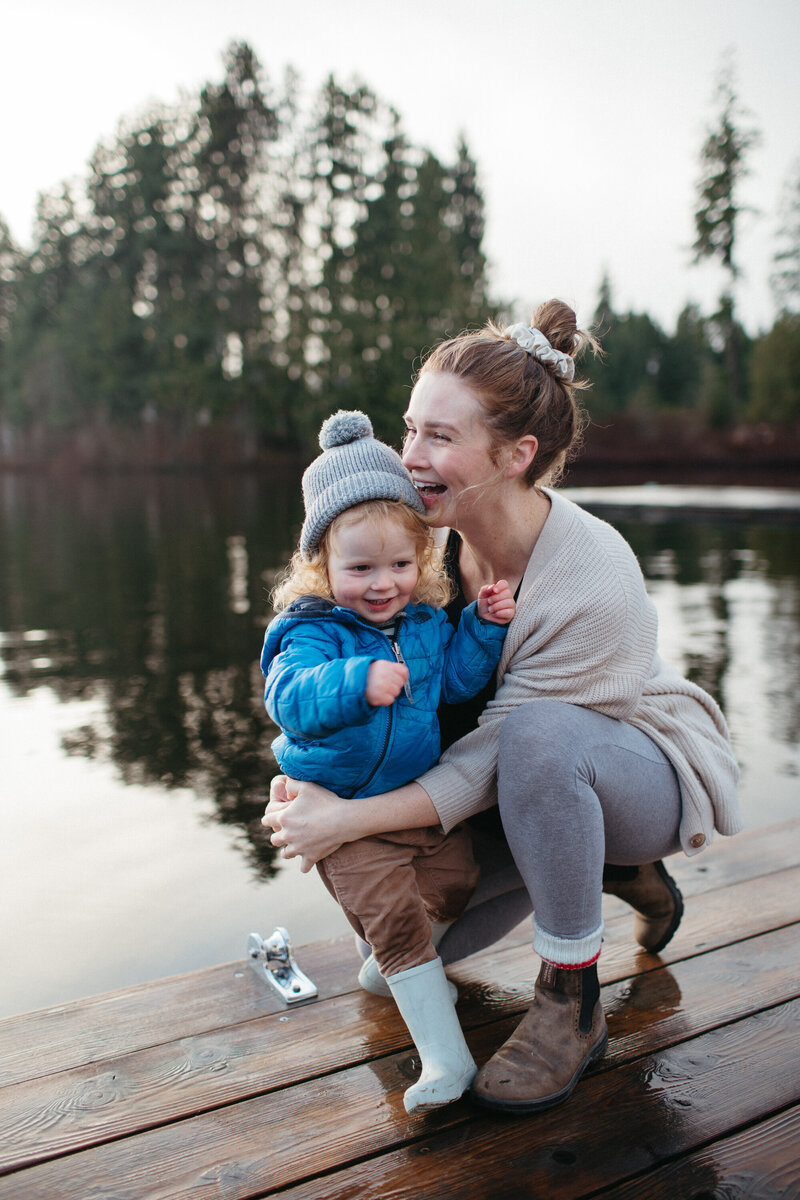
Let’s start at the beginning. Maybe you found me because you saw photos a friend had made of her family and you really loved them. But I think more likely, it’s that deep down you know there is so much love and beauty in your family. Even if you’re not feeling great about your body or your home right now, you know that you love your kids fiercely. You know that you’ve built a home that reflects your personalities and that you’re creating a life with intention.
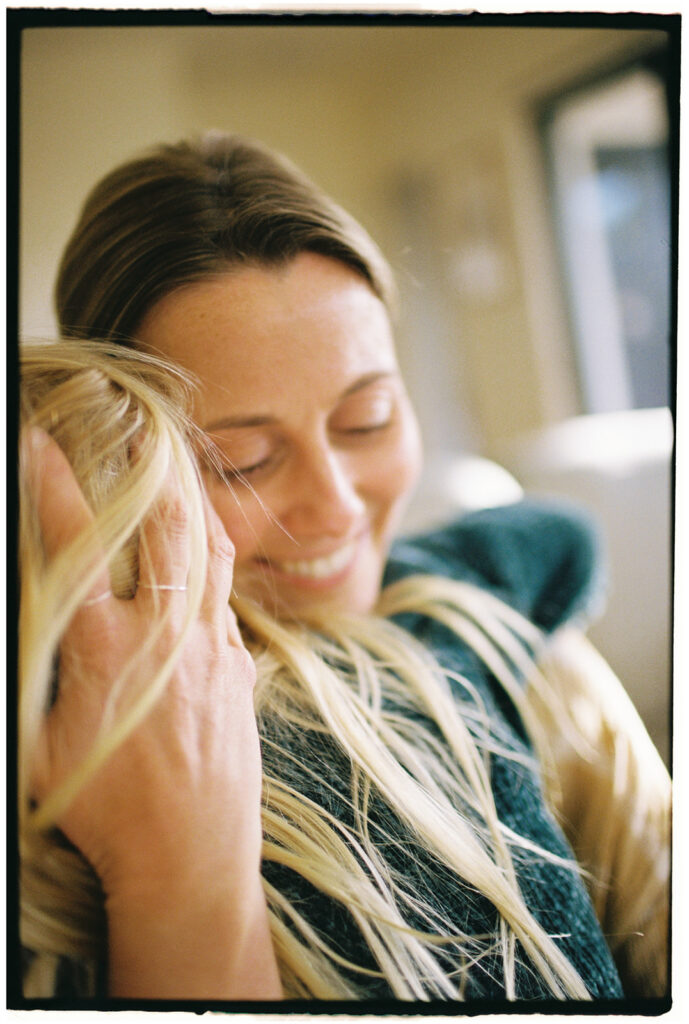
My job is to come in with a kind, loving mirror and hold it up to you. I want you to be able to see all the beauty you already know is there, and to show you what I hope you know deep down: that you’re doing a really good job of loving your kids.
When I say your home doesn’t need to be perfect for photos, I mean it. One of my favourite family shoots I’ve ever done was in a home that was about to be bulldozed. That family had so many memories there. They had outgrown it and they were saying goodbye. That is what I want to photograph.
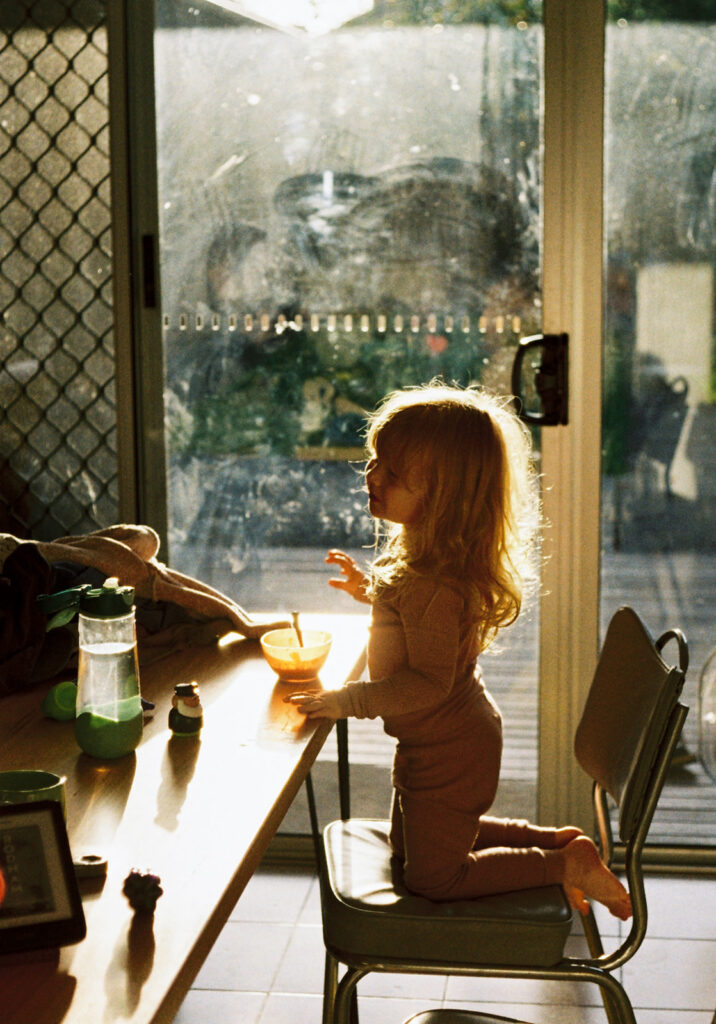
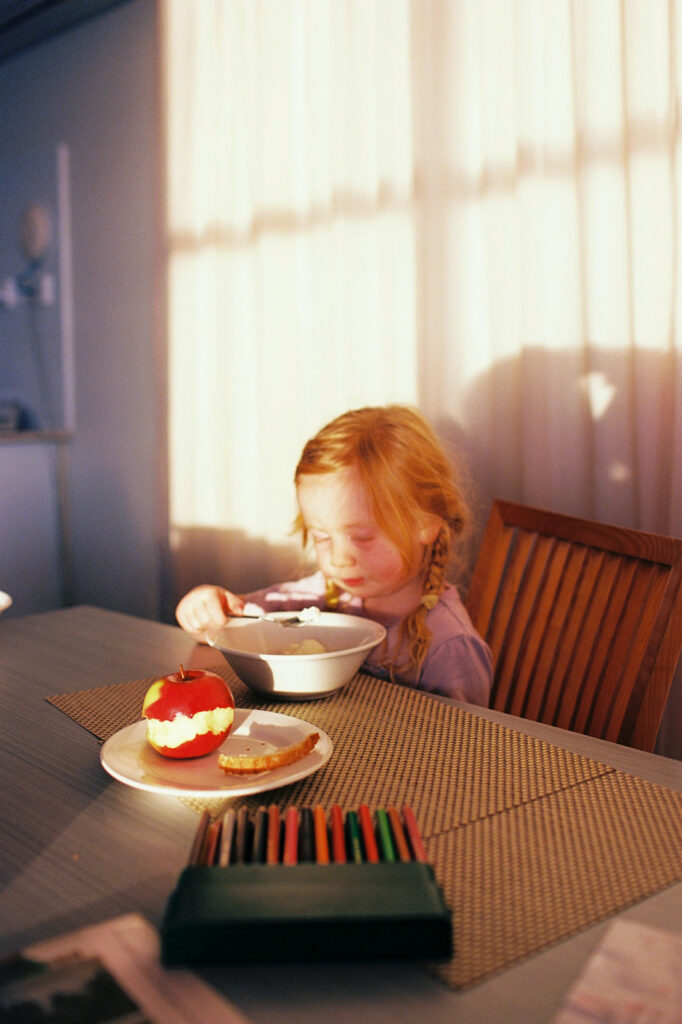
Your home doesn’t need to be clean and white and tidy. It gets to have colour and texture and mess, dog nose prints on the windows and crayon on the walls. In fact, the more of those things you have, the more alive your photos are going to feel.


How I Work: Connection, Improv, Presence and Play
I want to talk about my process when we do a session together, because I think it’s quite different from what people may have experienced with photographers before. I say I’m not a very posey photographer, but that doesn’t mean I just leave you to figure out what to do—because for so many of us, as soon as a camera lens is turned on us, we become awkward turtles and don’t know what to do with our hands.
The way I approach it is this: I try hard to get to know you and your family before the session, through at least one call and often a questionnaire. Then, at the start of the session, I don’t even have my cameras out. I get down on your kids’ level and engage with them first. I’ve been a teacher for a really long time, and I’ve found that connecting with kids—usually through play—quickly puts parents at ease.
Sometimes mums especially go into a session worrying about whether the kids will behave, how they’re going to go. When they can see straight away that their kids feel safe and seen and heard, and that this person coming into their home is actually a playmate, the kids relax. And when the kids relax, mum gets to relax too.

The Power of Improv
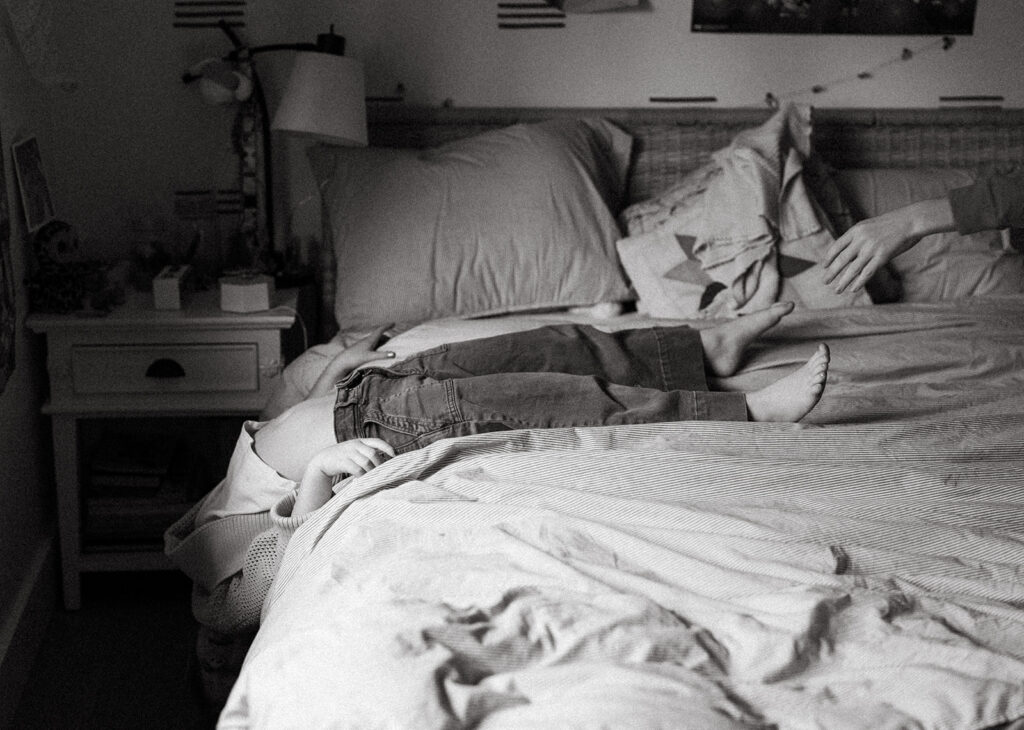
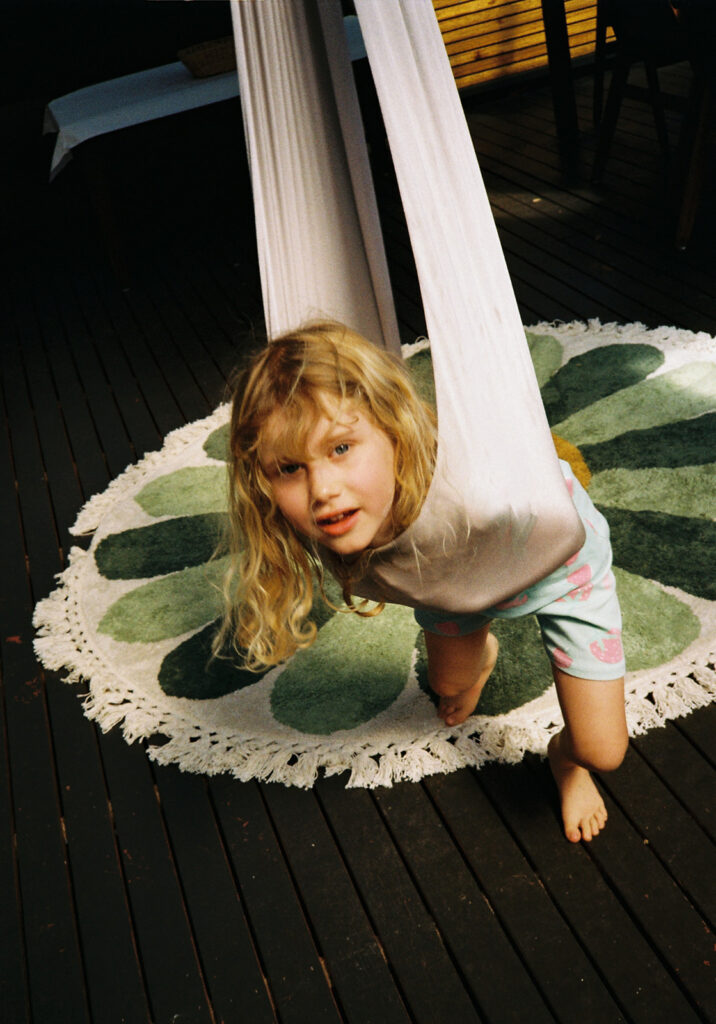
I say I’m a documentary-style photographer, but I don’t even know if that’s true anymore because so much of the way I photograph is improv. I don’t know about you, but I feel like so much of parenting is just coming up with improv games on the spot—and kids love it. It’s kind of like that when I make photos too.
I see where the good light is in your home or backyard. I see things that give me ideas for shots. I see colour, things to play with, and I come up with random ideas for games. I try to come up with things that won’t feel weird for you as parents, because every parent interacts differently with their kids, and I try to read the room really quickly to see what kinds of things you’d be comfortable with.
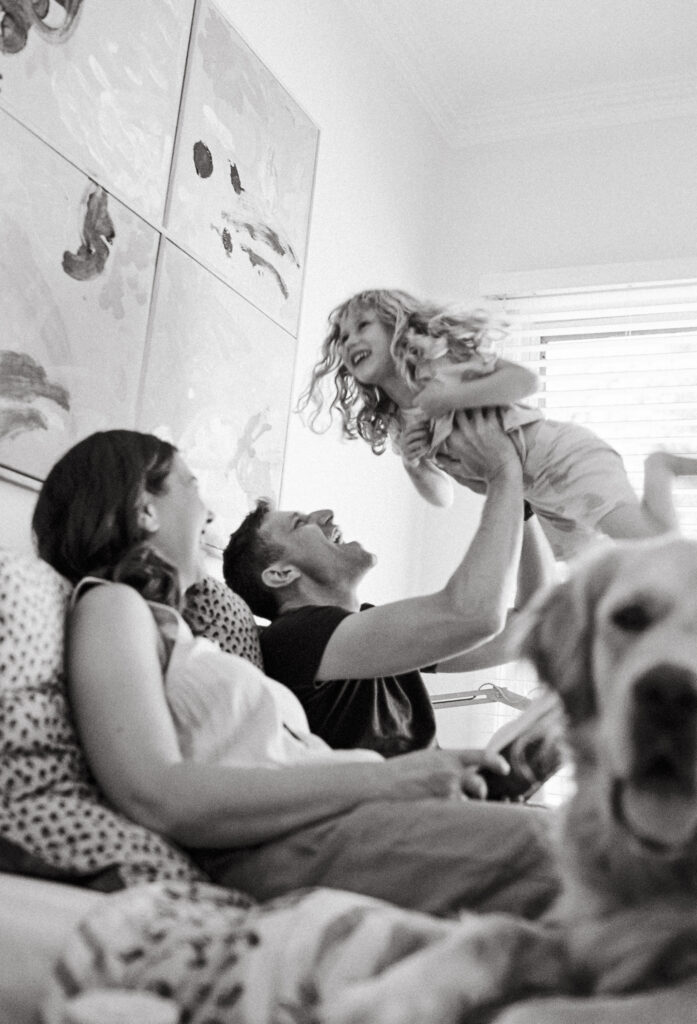
I think sessions with dads go really well when they don’t need to worry about the camera—they just get to play with their kids. Maybe that’s because a lot of the families I photograph have quite naturally playful dads. Not all dads are like that, but I feel like when dads get to be present with their kids, picking up a kid and hanging them upside down is a very natural thing for a lot of them to do. It’s something they can do with their hands that isn’t a cheesy pose.


What I’m Looking For
Compositionally, I really like to have lots of things going on in a frame. It’s probably why I photograph large families so frequently (again, classroom teacher – I’m good at embracing chaos and finding the magic in it). I like it when there’s something in mid-air and when there are things all the way to the edges. Sometimes that means people jumping, playing, climbing and having interactions with big emotional range. Sometimes it’s the dog off to the side. Sometimes it’s a ball in mid-air. I love movement. I love beautiful sunlight. I love texture. I love colour. And I look for those things everywhere.
So I’m not the kind of photographer who’s going to come into your house and say, “Okay, we’re all gonna do a big group portrait over here.” That’s not really how it’s going to work. We start slow. We start with connection. Some improv comes in. Some play comes in. I feel like those three things really guide a lot of how I photograph.
The end goal of my photos is that they are honest above anything else. I want them to feel really honest, so that when you look back at these photos you think, “Wow, that is what our lives felt like back then.” That’s really important to me.
The Question of What to Wear
It’s part of the reason why I don’t want my clients dressing up a lot for a photoshoot—unless they’re really wanting something that’s quite editorial with a bold colour or fashion vibe to it (these can be really fun, too, and involve moodboarding and planning together. Go nuts). Most of my families wear their normal everyday clothes, or maybe slightly nicer versions, for their photos.
We need to think about what these photos are signalling. If we do a family photoshoot and everyone’s dressed up in something new and nice, and maybe you’re uncomfortable and the kids didn’t really want to put on that shirt anyway, and dad’s a bit uncomfortable because he’s in a business shirt on his day off—no one’s really happy going into it. And I think that sets the tone for kids that this is going to be something mum’s making us do.
I don’t want that to be the tone. I don’t want this to be the kind of thing where you need to bribe your kids to be involved, because I really think they can have so much fun that you do not need to bribe them. The same goes for dads (I’m saying dads because in most families I’ve photographed with two mums, both were pretty keen to make the photos).
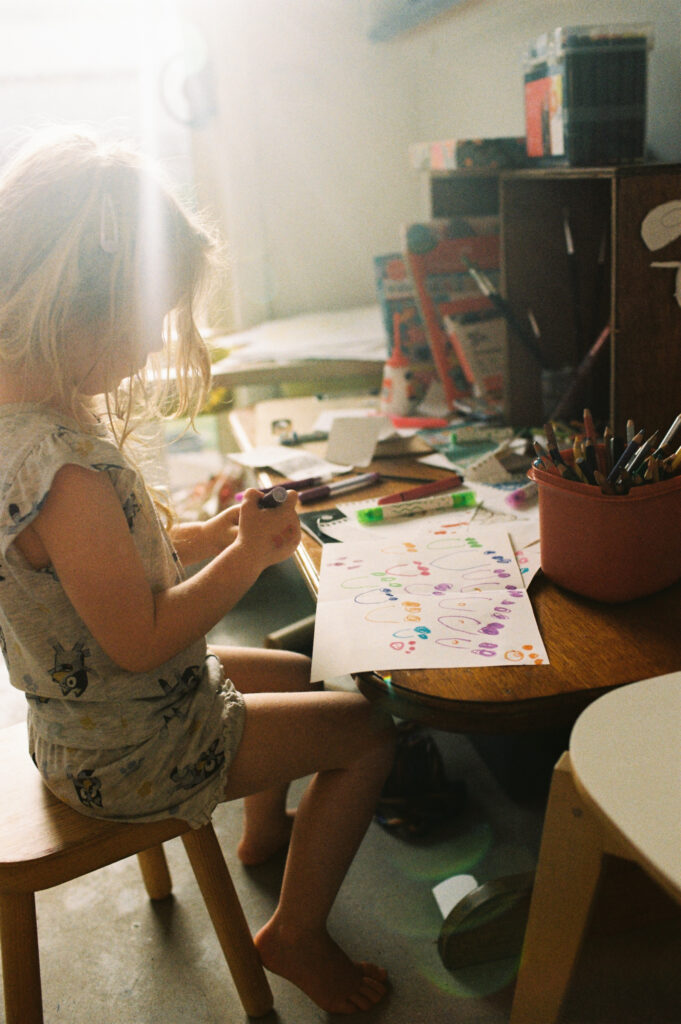


I think if everyone can just wear their normal favourite clothes—I can imagine your daughter has her iconic pair of sequined overalls; she gets to wear those—because when you look back at these photos, you’ll think, “Oh my gosh, remember those overalls that even when they were too small for her she kept wearing them?”
The photos don’t signal “remember that one day when we got all dressed up for family photos.” They signal “that’s what our life felt like back then.” That’s what I want.
So it is truly not about what you wear. I think you’re going to look really nice in your favourite everyday clothes. You can dress up a little bit, put some makeup on, do some nice hair, wear cute jeans rather than sloppy jeans. You can keep it really simple and you can still have it look very everyday, even though you’re putting in a little bit of effort. Because yes, I fully appreciate, mum, you want to look good in these photos. And I want you to look good in these photos too. But I also want the kids to look at these photos one day and think, “Damn, mum, look at you.” That’s important too.
More than anything though, I want your kids to be able to look at these photos in an album (yes, a physical album, not a screen) and think, “Oh my gosh, I was so loved. Look how amazing my childhood was.” That is what I want to do for you.


Why I Shoot Film: more than an aesthetic choice
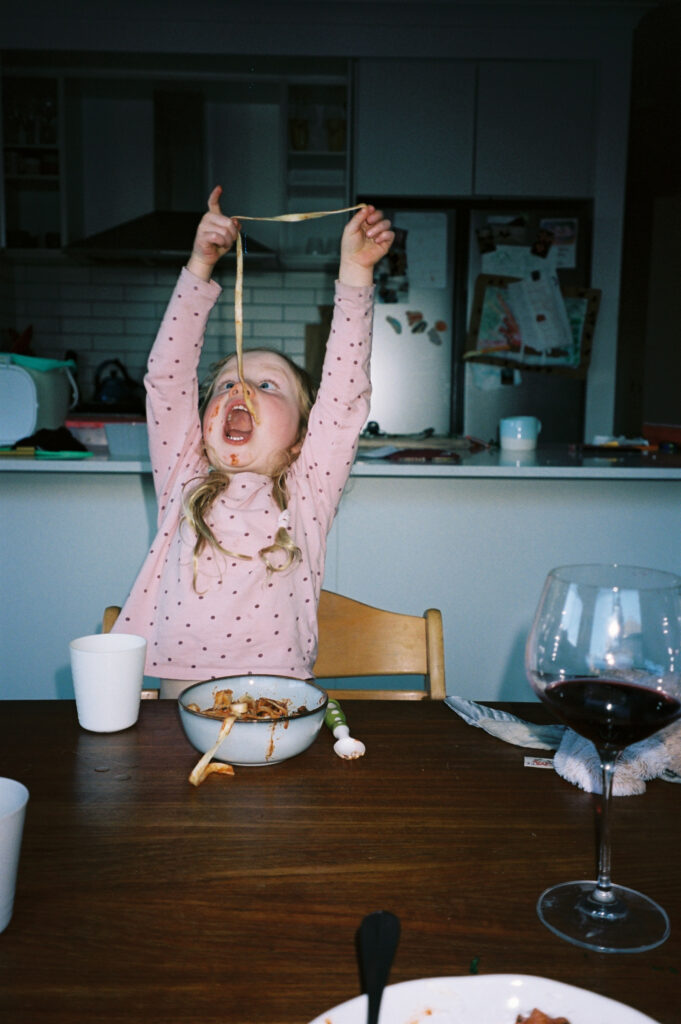
A big part of why I shoot film now is that I’ve come to realise when I shoot on digital in a really clean home, I struggle to find the story. Behind the perfect image of a beautiful family is a really lovely photo that many families want—but although it’s beautiful, I don’t think it’s an interesting photograph.
So I’ve switched to film because I find that on digital, I can take so many snaps that I will always end up getting the one photo that’s that one perfect moment where everyone’s eyes are open and everyone’s face looks lovely and everyone’s clothes are sitting nicely. But when I shoot on film, I take one, maybe two frames of that moment. So when I get the scans back, they are the moments that we get—they are not the perfect frames, they are the honest frames.
It means that the two-year-old might have a bit of stink eye, and it’s funny. It makes the photo so real, because maybe that’s an expression your two-year-old has often. But if I were shooting digital, I’d probably choose the frame where everyone’s faces look lovely and smiling. And while that would be lovely, it would not be nearly as relevant to the personalities in your family. When I shoot film, I feel like the imperfections bring another layer of texture and story to your family life.

Shooting from Impulse and Presence
I shoot from impulse. Sometimes I’ll see repetition of shapes or forms, or an emotion or a moment of connection, and I fire the shutter. I like the immediacy of that. But then I also love that I have to wait. I don’t know if I got the photo because I can’t just check the back of my camera to see if it’s perfectly in focus.
But because I can’t check the back of my camera, I’m not pulled out of that presence. I get to maintain presence with your family and keep going with that moment without being distracted by a screen. Because presence is what we need to be cultivating more of in our lives. These photos, this experience, is going to feel like deep presence with the people you love. And when you look back on your photos, you’ll feel that sense of presence again—of how connected you all were.


Leaning Into the Analogue
I also love that in an age of AI and hyper-perfectionism, where things are becoming so realistic that they’re surreal, I want to lean back into the humanness of everything. I want to lean back into an analogue life where things are imperfect because they have the marks of the maker as part of it.
Film photography to me is like buying a handmade mug where you can still see the imprints of the hands of the ceramicist. On the other end of the spectrum is the mug made by a machine that looks exactly the same as every other mug on the production line—made cheaply and quickly, without personality. It’s why I Very Seriously Encourage you to print your photos well (but that’s for another post).
If this approach resonates with you—if you want photos that feel honest and alive, that show the beautiful mess and deep love of your everyday life—I’d love to work with you. You can learn more about family sessions here.